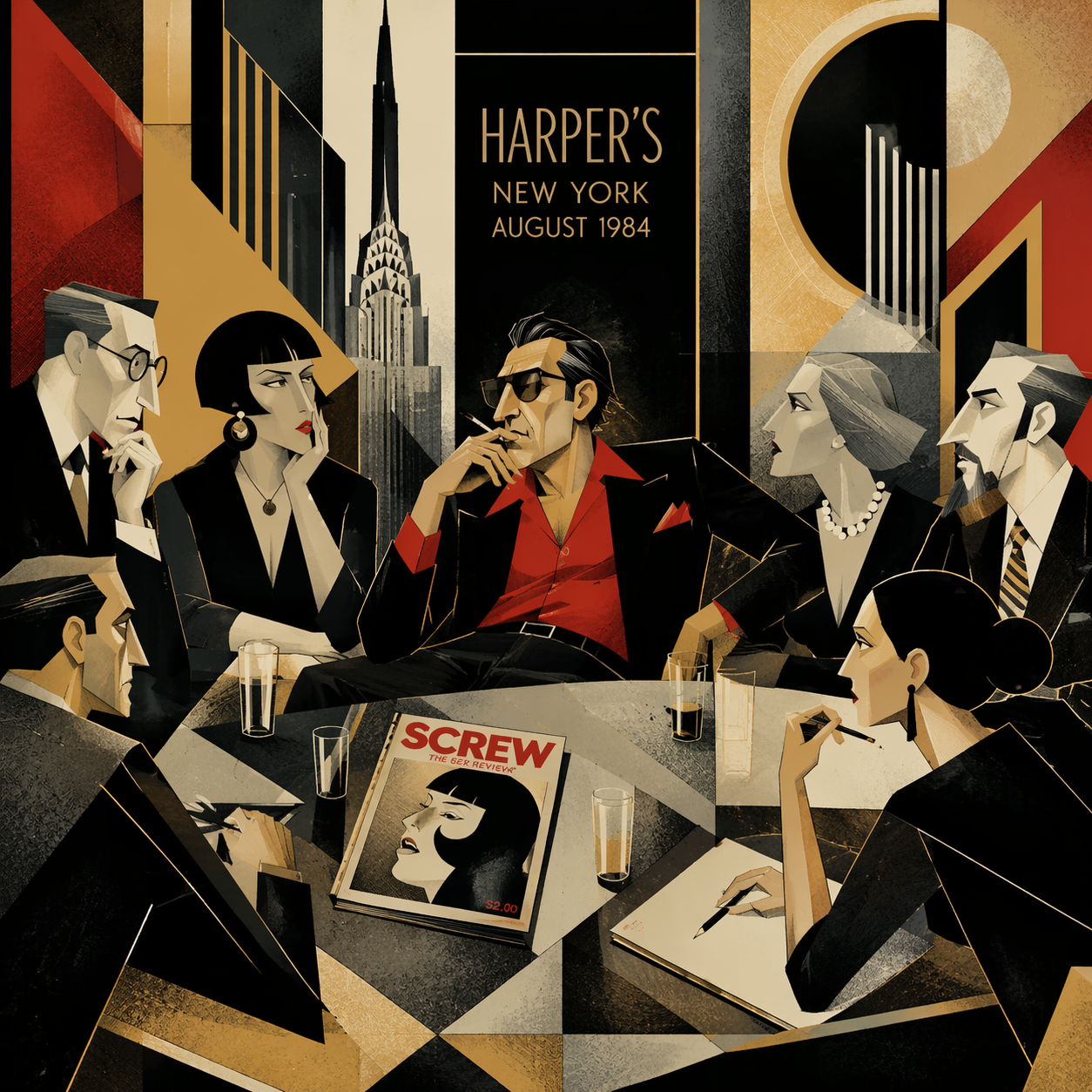
NEW YORK — In August 1984, Harper’s editor Lewis Lapham gathered a panel of literary types, feminists, civil libertarians, and professional pearl-clutchers to ask the eternal American question: what is pornography, and should somebody stop it?
Sitting in the middle of all that respectable handwringing was Al Goldstein, founder and publisher of SCREW, who did what Al always did when the cultured class tried to put sex in a cage. He blew the lock off. Asked to define pornography, Al said, simply, “I don’t know what pornography is. I haven’t a clue.”
It was the smartest thing said all afternoon…

The others came armed with theories. Susan Brownmiller called pornography anti-female propaganda. Erica Jong tried to draw a bright, tasteful line between eroticism and porn. The room was full of people determined to sort sex into neat little boxes labeled art, politics, danger, liberation, and class. Al answered them the way a guy from SCREW was supposed to answer them. Today’s pornography, he said, is tomorrow’s eroticism. He called the panel “uptight intellectuals,” accused them of elitism and pomposity, and mocked the idea that fun itself was somehow suspect. In a room full of people trying to elevate the discussion, Al dragged it back down to earth, where Americans actually live.
And the best part is that the argument hasn’t changed, only the wardrobe. In 1984, the anti-porn crowd talked about morality, degradation, public harm, and the corruption of culture. Now they use smoother words: safety, verification, standards, harm reduction, patriarchy. Same itch, better tailoring. They still start with porn because porn is the low-hanging fruit, easy to isolate, easy to sneer at, and easy to regulate without many respectable people objecting. Nobody wants to be caught looking like the guy defending smut, which is exactly why smut is always the first thing they come for.
Al understood what the others either missed or pretended not to see: porn was never just about porn. It was about who gets to define taste, who gets to police desire, and who gets to decide what the rest of us are allowed to read, watch, buy, or enjoy without apology. When Brownmiller complained about anti-female propaganda, Al’s answer was basically: tough. If propaganda has a right to exist, then so does the dirty kind. Crude? Sure. But honest. More honest, in fact, than the genteel fraud of pretending censorship is ever just about one thing.
That’s why the panel still matters. Not because anyone settled anything, but because it exposed the real divide. On one side were people trying to define pornography. On the other was Al Goldstein, reminding them that the people who most want to define it usually also want the power to define everything else. Forty-two years later the peep shows are gone, the smut mags are mostly history, and the panic has moved online. But the song is the same old dirge. The only real difference is that the scolds got better branding.
—P.
Featured Art: Phil Italiano, “Uptown Smut”, digital medium, 2025